A different kind of currency story
Lily Finch Six Writes presents a unique tale that will entertain and amuse you. This story is especially crafted for those who love travelling and diving into a good book. Join us as we explore a world where literacy and community spirit intertwine in the most unexpected ways.
“The True and Original Version-DK’s Eyewitness Guide to Quito, Ecuador”
By Lily Finch
We waited for hours to get to our destination. We had to change planes in Texas and then land in Quito approximately 5 hours and 37 minutes later. As we landed and were deboarding, we realized that a lot of objects were exchanging hands, and, more particularly, a lot of books. Quito has a 97% literacy rate, and my wife and I were sure that this book passing amongst people had something to do with it!
We were travelling with a lot of cash, as we read that the natives preferred cash to anything else since their atm connections were not always the best from day to day.
This was according to the succinct but expert advice and beautifully detailed illustrations that transported us right into the city streets and historic buildings with detailed maps and interesting facts—all found in DK's Eyewitness guide to Quito, Ecuador.
We were psyched for our trip, but when we caught a taxi, we noticed that he waved off the money we offered him to take us to our hotel. We exchanged glances— my wife and I were wondering what to expect.
Sensing something was off, my wife began digging for something else to barter for the ride to our home for the next month. Luckily, he was looking in the rearview mirror from time to time, and his eyes lit up when he saw the silk scarf that she pulled out of her bag.
At the end of the trip, she handed it over reluctantly, but as it seemed to do the trick, she offered it.
Entering the hotel, we arranged for our bags to be brought to the room and tipped the bellhop with an English book, “The Ink Black Heart” by Robert Galbraith, that I finished on the plane. Luckily, we had brought some TravelNitch Books to donate to the local school. It appears that this country appreciates books and scarves more than dollars as an accepted form of currency.
How much would it cost us to eat, swim, and sleep each night, or would we be able to pay all at once? Could we cover these expenses with a series of books?
It seemed to me that we would run out of books before our month was over if we weren’t careful. We needed to look for a way to earn something to barter with for our room and board.
Desperate and painfully aware of what we lacked to live well here, we asked, “¿Hay algún lugar donde podamos enseñar inglés para ganar algo de moneda local?” The answer was quick. “Sí, pueden ir a los hoteles locales, aeropuertos, o cualquier lugar turístico porque también ustedes hablan español. Entonces cosecharán los beneficios de la moneda local,” answered the bellhop. “¿Qué pasa con las escuelas? “¿Podemos ir a trabajar a las escuelas?” my wife asked, hoping that would be a good fit since that is what we both did in our old life back in North America.
“Para trabajar en las escuelas, deben preguntarle al director, quien los guiará sobre lo que deberán hacer a continuación.” The bellhop, Carlos, was functioning at our speed and seemed to be pleased with helping us. The price of the book seemed to guarantee his help and friendliness for a while. At least that was good for us for now.
We managed to forget about the currency headaches for a while to have a drink on the patio by the pool. As we cheered, we saw a man coming our way. He looked like he was on a mission. When he got to our table, he said, “I understand all you brought with you were American dollars, hoping that we would accept them here. Sorry, but we don’t deal with that currency here. We deal in pounds or we barter.
Most of the natives barter because the pound is far too expensive for us to handle here. I can escort you to the banks should you want to pursue the
pound. Otherwise, there is a local school on the next block. Tomorrow I could take you there to see if you can get a job as an English teacher.”
“Why, thank you. What is your name?” “My name is Rodrigo, and I am the concierge here. Anything you need, ask me, ok? See you tomorrow. Don’t worry, I'll share the book after Carlos, the bellhop, is finished with it; you are good here.” He winked and walked away.
That was the best news we had heard since arriving. It looked like we were going to be ok after all. When we got back to the room, we ordered a bottle of Glenfiddich Single Malt and shared a glass while looking out over the city.
We got some books ready to bring with us to the school for the Principal. I suggested keeping the books and bringing the magazines that we brought with us for the plane ride, since they were new and probably something that would be more of interest to a Principal. We brought “Chatelaine,” “People Royals,” and “People,” along with one cooking magazine, “All Recipes - One Pan.”
The following day, we made our way to the school with the help of Rodrigo. He introduced us to the Principal and explained what we were trying to accomplish. She accepted the magazines with a smile on her face. Then she took us to the classes where we would be working with students who needed to tweak their English.
We brought out the travel books to hopefully captivate them with stories of far-off lands that were written at their level. They were impressed with the story of Doyoli from Peru.
“Doyli to the Rescue: Saving Baby Monkeys in the Amazon” featured 10-year-old Doyli as she set out to rescue orphaned monkeys from her island home in the Peruvian Amazon. With help from her family, Doyli nurtures the monkeys until they are strong enough to be released back into their natural habitat. Along the way, they got to see what life is like for young Doyli, helping prepare meals at home, rowing to school in her canoe, and being an everyday hero for endangered animals in the Amazon rainforest. (written by Cathleen Burnham)
Every child in the room wanted to see the pictures and read about Doyoli in English. We began putting sentence by sentence on the board. The kids wrote in earnest the sentences into their books to take home. They were eager to have their parents learn about Doyoli, too.
As teachers, we were amazed by these students and their motivations for learning. They genuinely wanted to learn English and as a result, there were no interruptions to use the washroom or throw something out, or the ever-famous passing of notes back and forth between classmates. We were amazed at the 100% participation we had from the captivated audience.
Something happened that afternoon when we left the school. The students who went home told their parents what we were teaching and showed their parents the story; their parents showed up at the hotel with items that we could use as currency within the town. Our bellhop, Carlos, was taking stock and helping us to manage all of our ‘new currency.’ We knew now that we had enough books left to last us at least half of a year.
We posted the story titles on a board and thought we could do shows at night for parents, too, thereby securing our stay with lots of currency. The sign read: No se pierda las siguientes historias que le leerán los nuevos maestros: el Sr. y la Sra. Smith, quien se quedarán por un tiempo. “Story of the Mongolian Tent House,” “Finding Beauty in Diversity,” “Strangeworlds Travel Agency,” and “Madeline.
The people came in droves. Now the trick was to find out what the currency could do for us and what it was worth. Rodrigo came to us and said, “I think maybe I have found something in your cache of local currency. I found some poetry by Luis Enrique Fierro. Antología Poética (2007). This book will get you whatever you want in this country. He only passed this year. He was very famous both as a physician and as a poet. I suggest that you keep that one close to you for now.”
When we sorted the books, we saw their value was in their emotional weight, not their physical weight. If the book was intense, it seemed to carry more weight. We decided that the day had come to deliver the DK’s Eyewitness View to Quito, Ecuador, to our concierge, Rodrigo.
We found our rhythm with the locals and our teaching style. Our passion and our enthusiasm were no longer in understanding the currency so much as it was in figuring out what was keepable and what was passable to our trusty concierge and bellhop. We knew we had a lot of currency, but we just didn’t know which items were the most valuable and which were merely considered "bam" (bumming around money).
We finally had a day off and went for a tour around the city in search of some sweaters or, in my wife’s case, a cape for the chilly evenings that were unexpected (thank you, DK’s once again!). My wife entered a shop as I was taken in by an artist painting abstract art in the plaza central. I turned my head just in time to see my wife holding up a cape that I could tell she absolutely loved.
I made my way to her side now, and she asked, “¿cuanto cuesta? Por favor.
Translation
(How much does it cost? Please.)
“I would like Imbibe Magazine and The Red Bulletin Magazine, please. When I have those two items in my hand, the cape will be yours, Sr. Thank you!” As we left the store, I said to my wife, “What is the Imbibe Magazine? A magazine about drinks? How did we not know about this one?” We both laughed and continued our sightseeing. After some time, we returned to our hotel just in time to meet the two new couples who had just arrived. My wife had a sneaking suspicion that “they would have those magazines we needed. They were younger and seemed the type,” she said.
We watched now as the others underwent emotional blunderbuss and then saw the light go on when they eventually realized that they were supposed to gain currency rather than keep giving things away to survive in this place for the long haul.
We had just arrived at the pool when the pair of couples showed up for drinks. We offered to help but explained we would need something in return. the women said, “no problem, let us go and get all the magazines we brought with us and see if we have what you need!” We invited them to join us and explained how to learn the currency and make the most of their trip. After all, we were natives by now, according to “DK’s Eyewitness View to Quito, Ecuador,” and we were aware of what we needed to live well here. We were almost natives!
We took the magazines we needed, and then we showed them the magazines that we thought they could use to get onto public transportation to move around the city. We asked them to join us for breakfast tomorrow at 7:00 am, as we have work in the morning. “How long did you guys live here before you got jobs?” the blonde lady, Veronica, asked me. “Well, we asked about our jobs right away, as we didn’t have much in the way of bartering - we brought cash - something that nobody uses down here. I can take you to a bank where you can try to exchange your money for pounds, but again, hardly any people accept pounds. The trick,” if you don’t mind me saying, “is to find your niche and move toward it.” “Yes, we noticed that you two seem to be experts,” her husband, Geoffrey, said, expressing genuine concern about how they would generate currency for their vacation since they planned to travel beyond Quito. “I’m sorry, but we have never ventured outside of Quito; it’s just something we are not prepared to do. We have it good here, and we are happy here, so why rock the boat?” I asked.
“Yes, well, that’s intriguing. I get it, but that is our luck that we happened to bring some magazines, and since you have exchanged or bartered with us for some other books, we may have a wonderful deal of currency now.” “Well, thank you for explaining the reason for all of these books flying all over the place here. I totally get it now.” The other gentleman, Dale, spoke with urgency now, and it seemed he wanted to get going. We said, “Sure, no problem, have a lovely day!”
The following morning at breakfast, the couples were nowhere to be found. The bellhop, Carlos, said they had not returned from their excursion to the West Coast. I asked, “Could they have decided to stay overnight because of the distance?” Rodrigo said, “Very unlikely this is, because the currency outside of Quito is double what it is inside Quito. So they probably do not have enough currency to get back or to ride the bus. Unlike you two, they did not heed the warnings and did not follow our direction. They thought they could take a quickie course on our currency and the bartering system without actually dealing with it firsthand to learn how it works.”
While speaking to Rodrigo, we saw excursions to the Galapagos Islands advertised, but there was no pricing. Rodrigo was offering us insight into what he thought we needed to secure a trip to the islands. He felt confident that we had more than enough currency for both of us to go.
The question we posed was how much currency we have remaining if we used some from our cache to get there. He laughed and said, “My friends, you have enough to go to most of the South American countries and still live here like royalty. Vosotros no preocupéis por eso.”
I suddenly didn’t feel right about any excursions outside of Quito, so I told him we would think about it some more, and then we hung out at the pool. I asked my wife if we could postpone any activities at the coastline for now because venturing outside of Quito felt ominous to me and seemed unwise given our limited currency.
Having the magazines in hand now, we ventured back to the plaza central and to our favourite ‘Cape’ store. My wife went into the store and found the same salesperson we had dealt with on the previous occasion. He smiled and dropped what he was doing to make his way toward her. I entered the store slowly, following her, and arrived just in time to hear that the salesperson was pleased with the magazines and that the transaction was complete. My wife was beaming with her new Alpaca Cape. What more could somebody ask for, right?
We retreated to our hotel room to rest and think about our next move. What if this was all a ruse? Why was everyone treating us like celebrities? It came with such ease. Were we just fortunate to catch on so quickly? These questions swirled around my brain as I searched for the 'legs' in my scotch. I was currently writing a list of tongue-in-cheek associations I had made regarding the currency, the types of books, and the acquisitions they could procure.
A quick ride in a taxi might cost you a copy of "Gulliver's Travels" by Jonathan Swift. If you want to tip your bellhop, perhaps a copy of "Four Rooms" by Roald Dahl would suffice. If you are looking to stay at a hotel, you could bring a copy of "100 Years of Solitude" by Gabriel Garcia Marquez. If you need a change of clothing while you are here, a simple New York Times bestseller will get you a quick fix in a pinch. Suppose you are more refined in your taste. In that case, it might take a classic such as William Butler Yeats's “A Prayer for My Daughter,” among others of his work, to secure such a delicate lifestyle with a bit more finesse - say a week-long hotel stay where you end the day with a dinner for two on a private balcony each evening. Better yet, a signed copy of an original book of poetry from one of Ecuador’s finest, such as Karina Galvez's "Poesia y Cantares," is always a shoo-in for a top-notch night out on the town with a personal visit from a cellist who would play all night long for two. Guaranteed.
Of course, no judgment, but it’s just comical to me what kind of books will procure a prostitute in Quito. It seemed like the classic American Novels by Hemingway, Lee, Fitzgerald, Steinbeck, Twain, Alcott, and Ellison were enough to frequent Calle Doce on numerous occasions to be with the putas. Even those girls read the classics, apparently! Rodrigo and the bellhop, Carlos, shared that little tidbit with me.
Hesitantly but determinedly, I made plans to learn how to become a permanent citizen now, since we seem to have nailed the wily ways of living in Quito. It would come down to the amount of time we needed to remain in the country and how much currency it would cost to secure our citizenship. Regardless, we continued working at the tiny school down the road, enabling us to remain permanent fixtures at the hotel.
I joked with my wife that I should write my own “real DK’s Eyewitness Version of Quito Living” in direct contrast to the original “DK’s version,” of course, just to set the record straight! We both laughed as we watched the sunset, pleased with our accomplishments, as we drank our scotch neat.
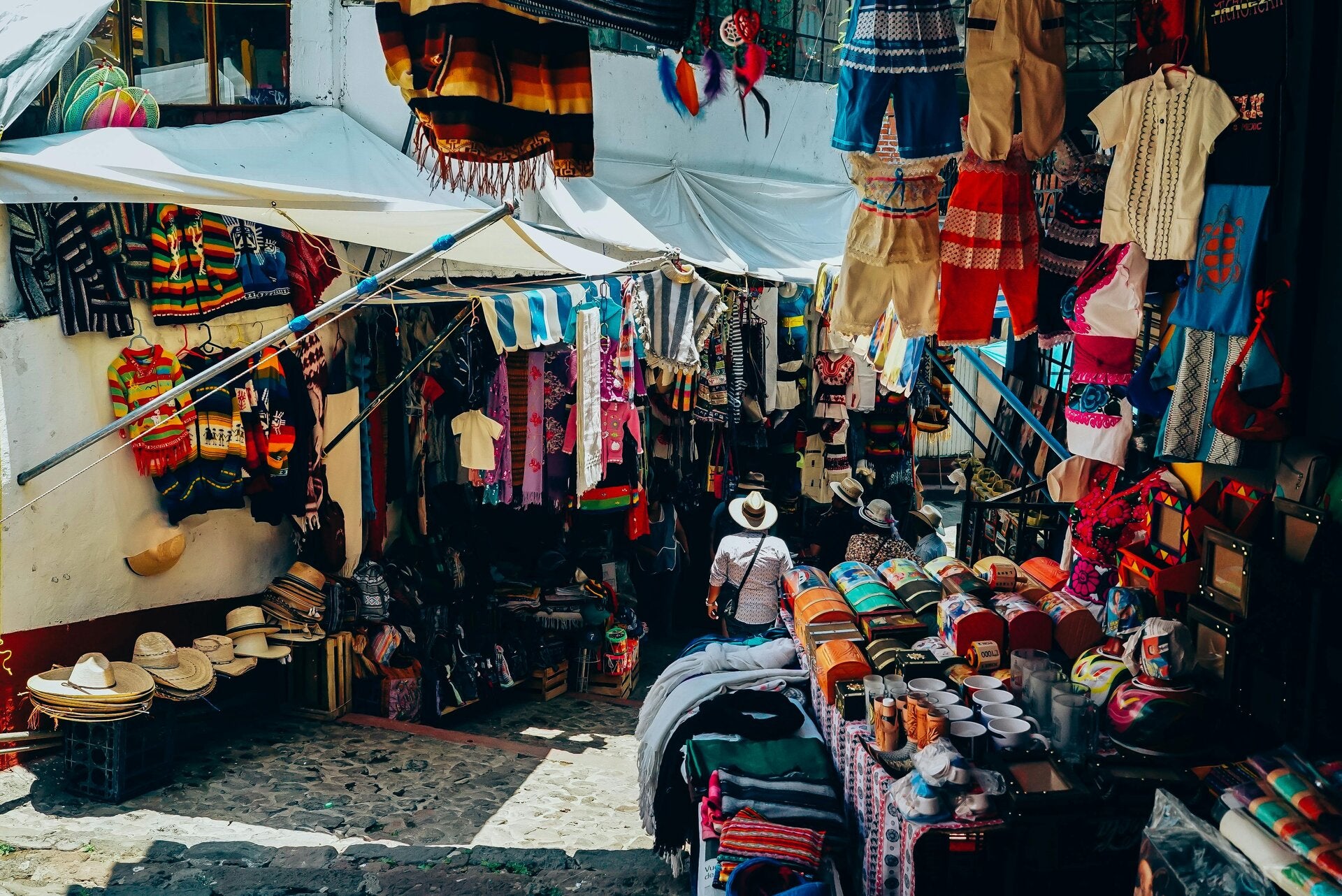
Quito, Ecuador: The stage is set
What makes this story special? Imagine Quito, Ecuador, where books are currency in a 5-star hotel. Follow the adventure of an American couple as they plan their retirement, secure English teaching jobs, and immerse themselves in a community that values literacy above all else. Lily Finch Six Writes brings you a story that is as unique as it is heartwarming.

Literacy's ripple effect
Dive deeper into the themes of our story. At Lily Finch Six Writes, we believe that books and magazines serve as a unique currency, reinforcing the importance of literacy within the community. Discover how people are willing to help one another, demonstrating that literacy touches us all in profound ways.

More stories await
Eager for more eclectic short stories? Explore other captivating narratives from Lily Finch Six Writes. From action-packed adventures to thought-provoking tales, there's always something new to discover. Visit our short stories page and let your imagination soar.